SPECIAL OFFER • LIMITED TIME

Ruzave Alliance

Get real-time shipping updates, verified business visibility, and growth tools for your Alliance Group — First Come, First Serve.

Ruzave Alliance
Verified Network
📈 Business Growth/Chat
🌍 Global Community
Trusted by shipping professionals • Download the app now

The increase in new Ro/Ro vessel builds has resulted in the car carrier order book reaching a record high.

The increase in new Ro/Ro vessel builds has resulted in the car carrier order book reaching a record high.
blog image
Maritime

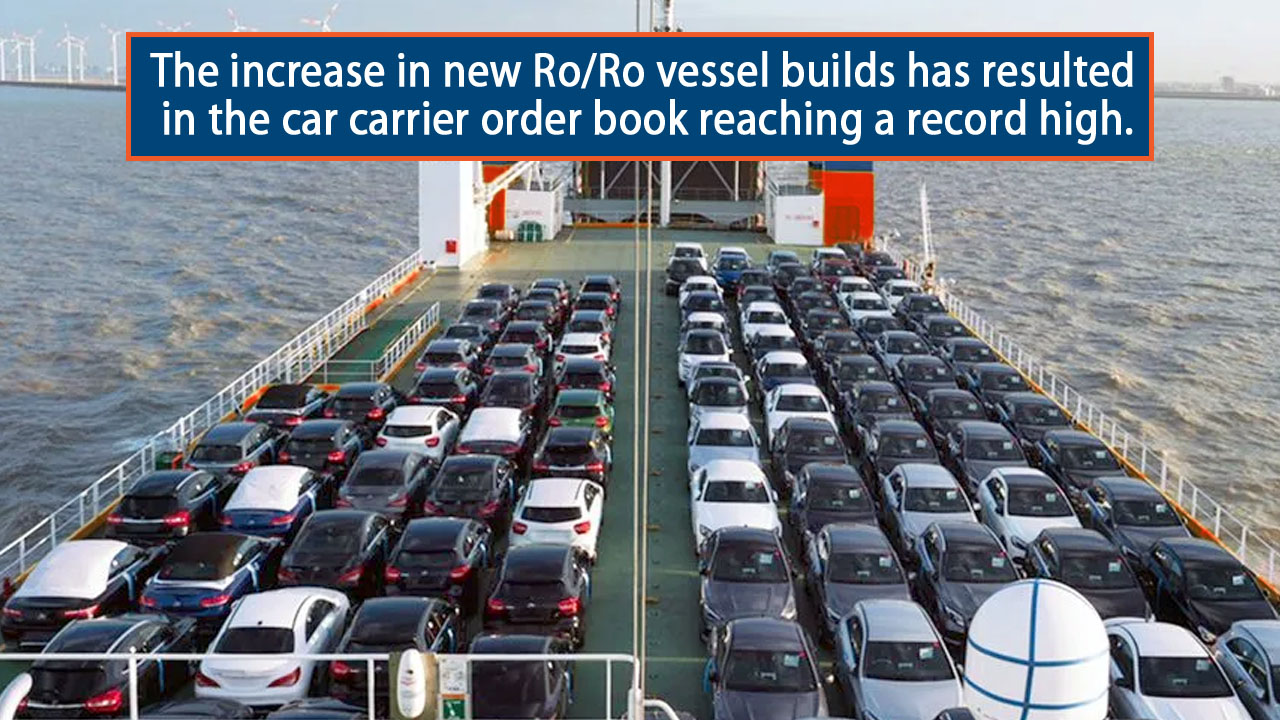
The increase in new Ro/Ro vessel builds has resulted in the car carrier order book reaching a record high.

Investment in new vehicle carriers and roll-on/roll-off (Ro/Ro) tonnage has significantly boosted the order book to record levels, even amid signs of slowing global light vehicle production, according to analysts. Recent activity has seen an influx of new orders and increases to existing orders from notable companies such as CIDO Shipping, short-sea Ro/Ro operator CLdN, and the privately owned Wallenius Wilhelmsen. As a result, the order book has expanded to encompass 217 car carriers, amounting to a total of 4.7 million deadweight metric tons (dwt). This marks a substantial 14.6% increase from the 4.1 million dwt recorded in January. The data, released on Friday by shipbroker Clarkson’s, highlights the growing demand for these specialized vessels. In terms of tonnage, the current total represents 36.2% of the existing fleet, which stands at 13.1 million dwt. This surge in orders reflects not only the resilience of the car carrier market but also the strategic moves by shipping companies to adapt to changing market dynamics and future demand. The ongoing investment suggests confidence in the long-term viability of vehicle transport, despite the current fluctuations in light vehicle production.

05 Oct 24
blog image
Maritime

The increase in new Ro/Ro vessel builds has resulted in the car carrier order book reaching a record high.

Investment in new vehicle carriers and roll-on/roll-off (Ro/Ro) tonnage has significantly boosted the order book to record levels, even amid signs of slowing global light vehicle production, according to analysts. Recent activity has seen an influx of new orders and increases to existing orders from notable companies such as CIDO Shipping, short-sea Ro/Ro operator CLdN, and the privately owned Wallenius Wilhelmsen. As a result, the order book has expanded to encompass 217 car carriers, amounting to a total of 4.7 million deadweight metric tons (dwt). This marks a substantial 14.6% increase from the 4.1 million dwt recorded in January. The data, released on Friday by shipbroker Clarkson’s, highlights the growing demand for these specialized vessels. In terms of tonnage, the current total represents 36.2% of the existing fleet, which stands at 13.1 million dwt. This surge in orders reflects not only the resilience of the car carrier market but also the strategic moves by shipping companies to adapt to changing market dynamics and future demand. The ongoing investment suggests confidence in the long-term viability of vehicle transport, despite the current fluctuations in light vehicle production.


05 Oct 24
blog image
Maritime

The increase in new Ro/Ro vessel builds has resulted in the car carrier order book reaching a record high.

Investment in new vehicle carriers and roll-on/roll-off (Ro/Ro) tonnage has significantly boosted the order book to record levels, even amid signs of slowing global light vehicle production, according to analysts. Recent activity has seen an influx of new orders and increases to existing orders from notable companies such as CIDO Shipping, short-sea Ro/Ro operator CLdN, and the privately owned Wallenius Wilhelmsen. As a result, the order book has expanded to encompass 217 car carriers, amounting to a total of 4.7 million deadweight metric tons (dwt). This marks a substantial 14.6% increase from the 4.1 million dwt recorded in January. The data, released on Friday by shipbroker Clarkson’s, highlights the growing demand for these specialized vessels. In terms of tonnage, the current total represents 36.2% of the existing fleet, which stands at 13.1 million dwt. This surge in orders reflects not only the resilience of the car carrier market but also the strategic moves by shipping companies to adapt to changing market dynamics and future demand. The ongoing investment suggests confidence in the long-term viability of vehicle transport, despite the current fluctuations in light vehicle production.


05 Oct 24