All Categories
.png) Maritime
Maritime  Port Terminal Services
  Ocean Logistics
  Air Logistics
  Land Logistics
  Chartering & Broking
 .png) Warehousing
Warehousing  Freight Forwarders
  Association & Institute
 India is looking to exempt Vessel Sharing
Agreements (VSAs) in the container shipping industry from antitrust laws for a
period of three years. This exemption comes with the stipulation that at least
5% of the total space in these agreements must be allocated to Indian-flagged
vessels and another 5% to Indian non-vessel operating common carriers (NVOCCs).
The draft notification regarding this initiative was issued recently and aims
to boost India’s presence in global container trade. The Directorate General of
Shipping (DGS) explained that the goal of this draft notification is to promote
fair competition, enhance transparency, and ensure better representation of
Indian shipping lines and NVOCCs in the international market. This is
particularly important given the current challenges in the maritime sector,
such as fair space allocation and anti-competitive practices. NVOCCs act as
intermediaries for shipping companies and their customers, consolidating cargo
without owning or operating ships. The DGS emphasized that the conditions
outlined in the notification specifically address these market challenges, with
a focus on including Indian-flagged vessels. The DGS will closely monitor the
operation of these VSAs during the three-year exemption, ensuring compliance
with the stipulated terms and conditions. They may request information from
relevant parties and conduct inquiries based on complaints or practices that
violate Indian laws. This information could relate to issues like refusal to
negotiate with shippers, non-transparent fees, discriminatory practices, or any
anti-competitive behavior. The findings from these inquiries will be shared
with the Competition Commission of India to assess whether the VSAs have a
harmful impact on competition. This isn’t the first time VSAs have been exempt
from certain provisions of India’s Competition Act; they’ve enjoyed this exemption
since 2012, with the most recent period ending in July. The exemption applies
to carriers of all nationalities operating ships from any Indian port, as long
as these agreements do not involve price-fixing, capacity limitations, or
market allocation. Currently, Indian ship owners hold a minuscule share in the
mainline container shipping trade, with around 99% of India’s export-import
container trade by volume being handled by a few dominant global carriers,
including Mediterranean Shipping Company, Maersk, CMA CGM, Hapag Lloyd,
Evergreen, Wan Hai, Yang Ming, COSCO, and Ocean Network Express. This new
initiative could provide a crucial opportunity for Indian players to strengthen
their foothold in the industry.
Maritime
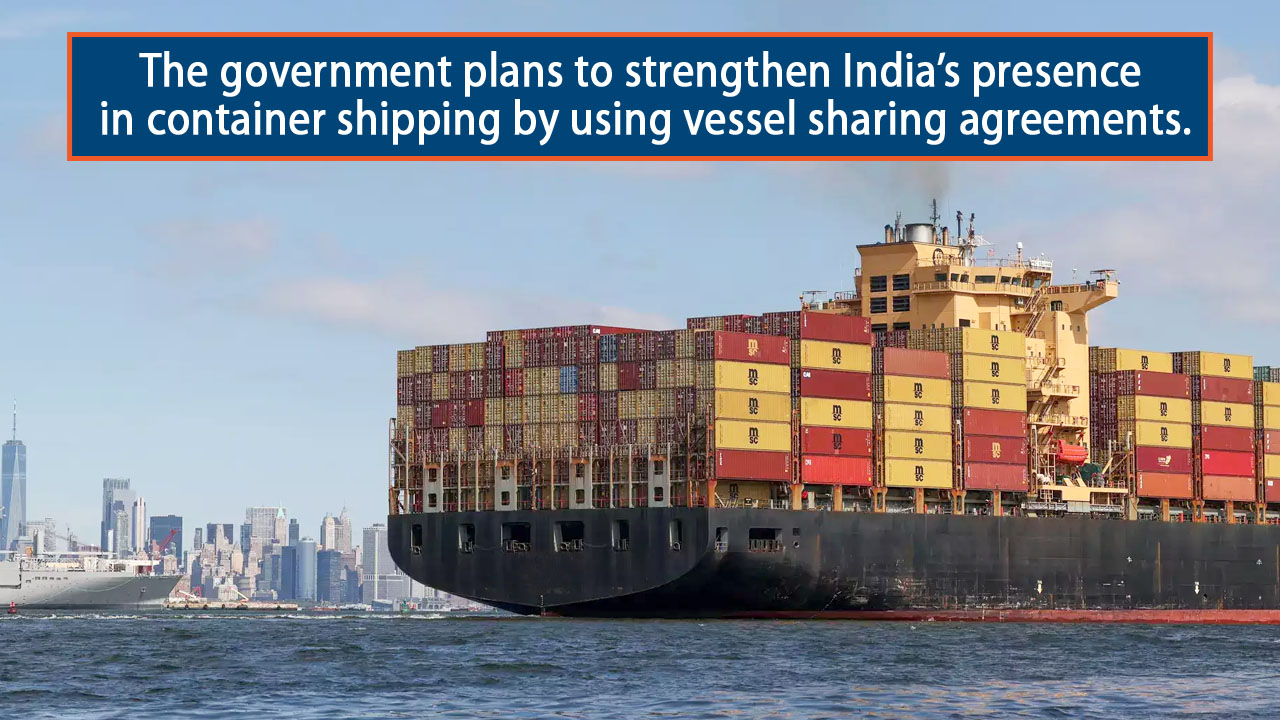
The government plans to strengthen India’s presence in container shipping by using vessel sharing agreements.
05 Oct 24