All Categories
.png) Maritime
Maritime  Port Terminal Services
  Ocean Logistics
  Air Logistics
  Land Logistics
  Chartering & Broking
 .png) Warehousing
Warehousing  Freight Forwarders
  Association & Institute
 Traders are increasingly utilizing a new
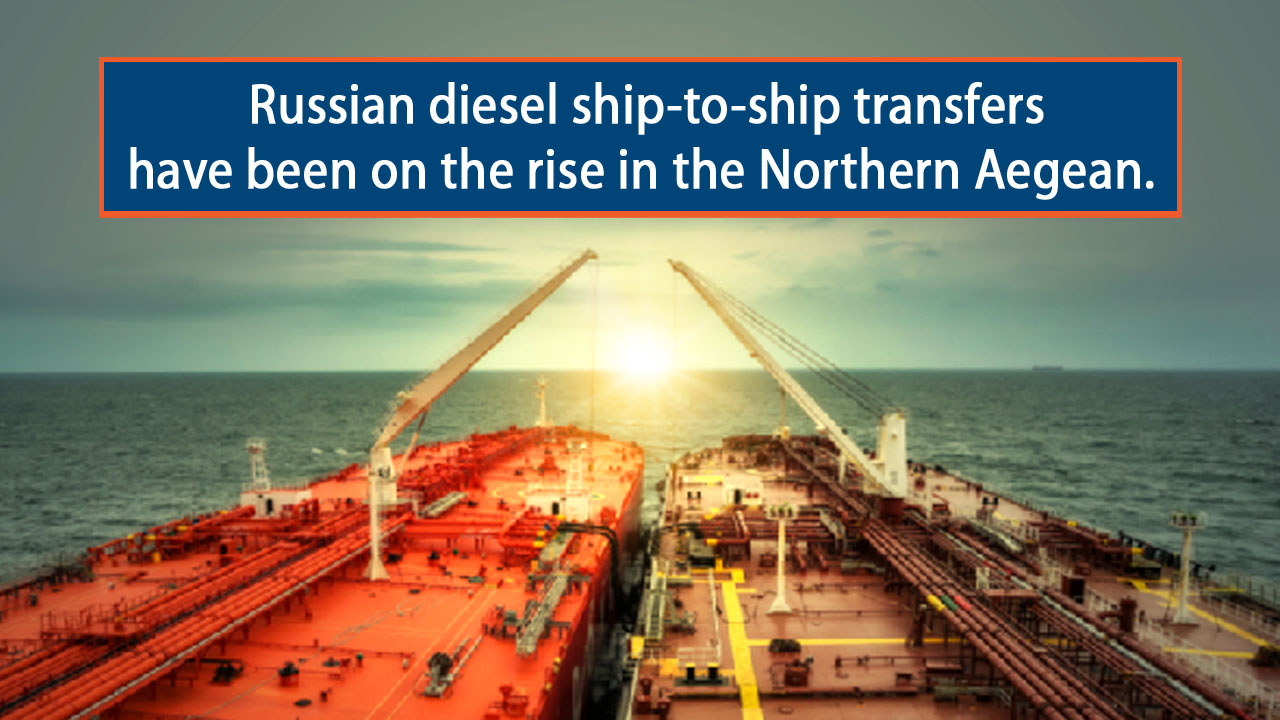
ship-to-ship (STS) loading site in the northern Aegean Sea to handle Russian
diesel cargoes, as Western sanctions have made it challenging for vessels
carrying fuel directly from Russian ports. Since the European Union's embargo
on importing Russian oil products went into effect in February 2023, there's
been a noticeable shift in how diesel exports are routed. Traders have
redirected these exports to countries such as Brazil, Turkey, and various
African and Asian nations, as well as using STS loadings to obscure the origins
of the Russian oil. The Laconian Gulf off Greece has become a favoured location
for these STS transfers due to its strategic position near Russian ports and
the Suez Canal, which provides access to Asian markets. This area has seen
increased activity as it offers a discreet option for moving Russian oil
products amid the sanctions. In response to this surge in activity, Greece
issued two notices in April warning of military exercises in the Laconian Gulf,
advising vessels to avoid the area to ensure safety. As a result of these
restrictions, tankers carrying Russian oil products have begun shifting their
routes away from south-eastern Peloponnese waters. Many now head to ports like
Malta and Port Said in northern Egypt. For example, in July, data shows that at
least four vessels carrying a combined total of about 123,000 metric tons of
diesel and gasoil, loaded at Russia's Black Sea ports of Taman and Tuapse, were
seen conducting their transhipment in neutral waters south of the Greek island
of Chios. This shift highlights the ongoing adaptation of maritime trade routes
in response to geopolitical pressures and sanctions. In August, three
more vessels have been loaded with about 100,000 tons of gasoil at Tuapse and
are now heading towards ship-to-ship (STS) transfers south of the islands in
the northern Aegean, according to traders and shipping data. This uptick in STS
activity might be linked to the latest EU sanctions, which have intensified
efforts against Russia's so-called shadow fleet—foreign vessels involved in
transporting Russian oil products. The EU's latest sanctions package, adopted
in June, aims to target these elusive operations more effectively. Currently,
Russia is exporting roughly 3.5 million metric tons of low-sulphur diesel and
gasoil each month, with up to 0.8 million tons coming from Tuapse and Taman, as
reported by LSEG data.
Maritime
Russian diesel ship-to-ship transfers have been on the rise in the Northern Aegean.
14 Aug 24