All Categories
.png) Maritime
Maritime  Port Terminal Services
  Ocean Logistics
  Air Logistics
  Land Logistics
  Chartering & Broking
 .png) Warehousing
Warehousing  Freight Forwarders
  Association & Institute
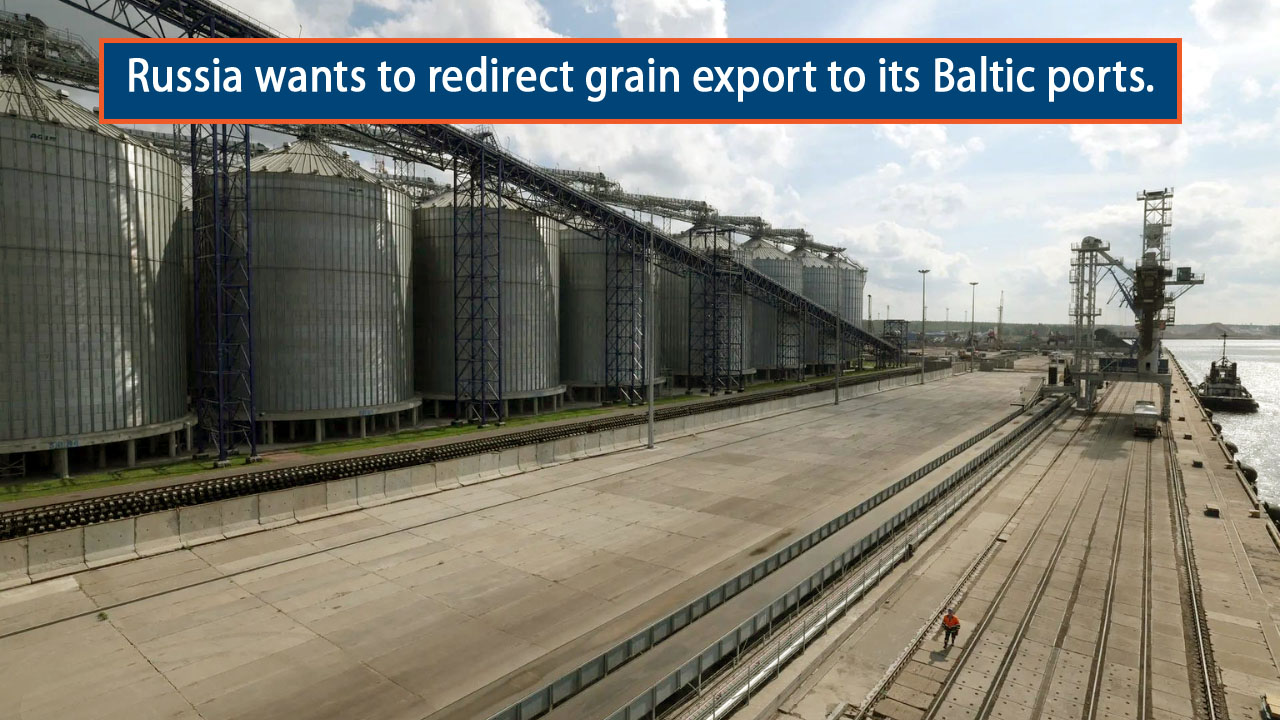
 Russia's goal to increase agricultural exports by 50% by 2030 is driven by its desire to solidify its position as a top global supplier. However, the ongoing conflict has made Black Sea ports increasingly vulnerable to attacks from Ukrainian missiles and drones, creating a precarious situation for exports. To mitigate these risks, Russia is investing in the expansion of its Baltic Sea ports, which offer a more secure alternative for transporting grain and other agricultural goods. This shift not only aims to enhance logistical efficiency but also seeks to attract new markets, as Baltic ports provide access to European and Asian routes. By establishing a stronger foothold in this region, Russia hopes to stabilize its agricultural export operations and reduce the threat posed by the ongoing conflict, all while attempting to meet its ambitious export targets.
Maritime
Russia wants to redirect grain export to its Baltic ports.
30 Sep 24