SPECIAL OFFER • LIMITED TIME

Ruzave Alliance

Get real-time shipping updates, verified business visibility, and growth tools for your Alliance Group — First Come, First Serve.

Ruzave Alliance
Verified Network
📈 Business Growth/Chat
🌍 Global Community
Trusted by shipping professionals • Download the app now

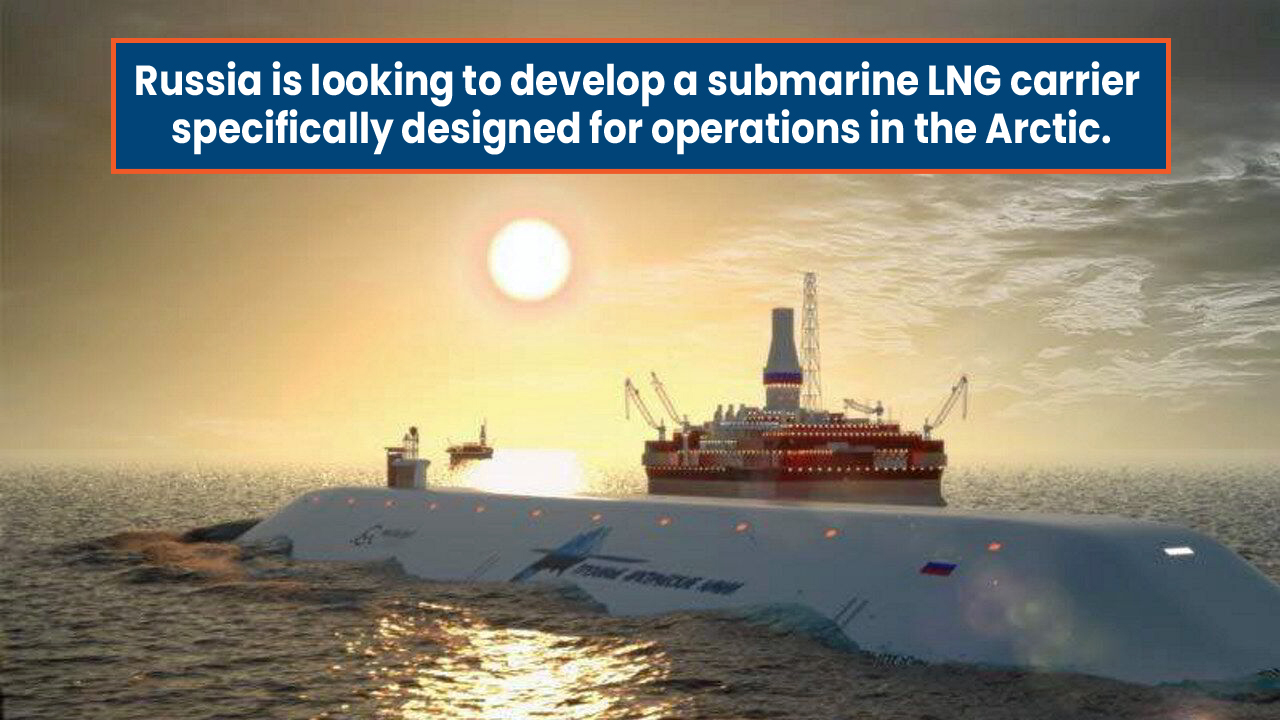
Russia is looking to develop a submarine LNG carrier specifically designed for operations in the Arctic.

Russia is looking to develop a submarine LNG carrier specifically designed for operations in the Arctic.
blog image
Maritime

Russia is looking to develop a submarine LNG carrier specifically designed for operations in the Arctic.

Mikhail Kovalchuk, President of Russia’s Kurchatov Institute, recently showcased a model of a nuclear-powered underwater liquefied natural gas (LNG) carrier, emphasizing that it's still an early design idea. This concept emerges more than 40 years after a similar American project and is expected to cost over a billion euros. Russia is exploring this innovative vessel to facilitate the export of its significant LNG production via the Arctic Northern Sea Route (NSR), which offers a strategic bypass around Western sanctions. However, the NSR is mostly covered in thick ice for much of the year, necessitating the use of nuclear-powered icebreakers for navigation. The proposed submarine LNG carrier aims to overcome these challenges, with the potential to reach speeds of up to 17 knots (about 31.5 km/h), significantly reducing travel time along the NSR from 20 days to just 12. The Malakhit design bureau, known for its expertise in submarine development, is leading the project. This vessel is designed to be approximately 360 meters long, 70 meters wide, and 30 meters high, with a draft of 12 to 13 meters. It will be powered by three RITM-200 nuclear reactors, which will drive three propulsion electric motors, each capable of 30 MW. With a cargo capacity of 170,000 to 180,000 cubic meters, the submarine LNG carrier aims to fit into the infrastructure at Sabetta port, a joint venture between the Russian government and private company Novatek, which operates the Yamal LNG plant in the Arctic Kara Sea.

24 Oct 24
blog image
Maritime

Russia is looking to develop a submarine LNG carrier specifically designed for operations in the Arctic.

Mikhail Kovalchuk, President of Russia’s Kurchatov Institute, recently showcased a model of a nuclear-powered underwater liquefied natural gas (LNG) carrier, emphasizing that it's still an early design idea. This concept emerges more than 40 years after a similar American project and is expected to cost over a billion euros. Russia is exploring this innovative vessel to facilitate the export of its significant LNG production via the Arctic Northern Sea Route (NSR), which offers a strategic bypass around Western sanctions. However, the NSR is mostly covered in thick ice for much of the year, necessitating the use of nuclear-powered icebreakers for navigation. The proposed submarine LNG carrier aims to overcome these challenges, with the potential to reach speeds of up to 17 knots (about 31.5 km/h), significantly reducing travel time along the NSR from 20 days to just 12. The Malakhit design bureau, known for its expertise in submarine development, is leading the project. This vessel is designed to be approximately 360 meters long, 70 meters wide, and 30 meters high, with a draft of 12 to 13 meters. It will be powered by three RITM-200 nuclear reactors, which will drive three propulsion electric motors, each capable of 30 MW. With a cargo capacity of 170,000 to 180,000 cubic meters, the submarine LNG carrier aims to fit into the infrastructure at Sabetta port, a joint venture between the Russian government and private company Novatek, which operates the Yamal LNG plant in the Arctic Kara Sea.


24 Oct 24
blog image
Maritime

Russia is looking to develop a submarine LNG carrier specifically designed for operations in the Arctic.

Mikhail Kovalchuk, President of Russia’s Kurchatov Institute, recently showcased a model of a nuclear-powered underwater liquefied natural gas (LNG) carrier, emphasizing that it's still an early design idea. This concept emerges more than 40 years after a similar American project and is expected to cost over a billion euros. Russia is exploring this innovative vessel to facilitate the export of its significant LNG production via the Arctic Northern Sea Route (NSR), which offers a strategic bypass around Western sanctions. However, the NSR is mostly covered in thick ice for much of the year, necessitating the use of nuclear-powered icebreakers for navigation. The proposed submarine LNG carrier aims to overcome these challenges, with the potential to reach speeds of up to 17 knots (about 31.5 km/h), significantly reducing travel time along the NSR from 20 days to just 12. The Malakhit design bureau, known for its expertise in submarine development, is leading the project. This vessel is designed to be approximately 360 meters long, 70 meters wide, and 30 meters high, with a draft of 12 to 13 meters. It will be powered by three RITM-200 nuclear reactors, which will drive three propulsion electric motors, each capable of 30 MW. With a cargo capacity of 170,000 to 180,000 cubic meters, the submarine LNG carrier aims to fit into the infrastructure at Sabetta port, a joint venture between the Russian government and private company Novatek, which operates the Yamal LNG plant in the Arctic Kara Sea.


24 Oct 24