All Categories
.png) Maritime
Maritime  Port Terminal Services
  Ocean Logistics
  Air Logistics
  Land Logistics
  Chartering & Broking
 .png) Warehousing
Warehousing  Freight Forwarders
  Association & Institute
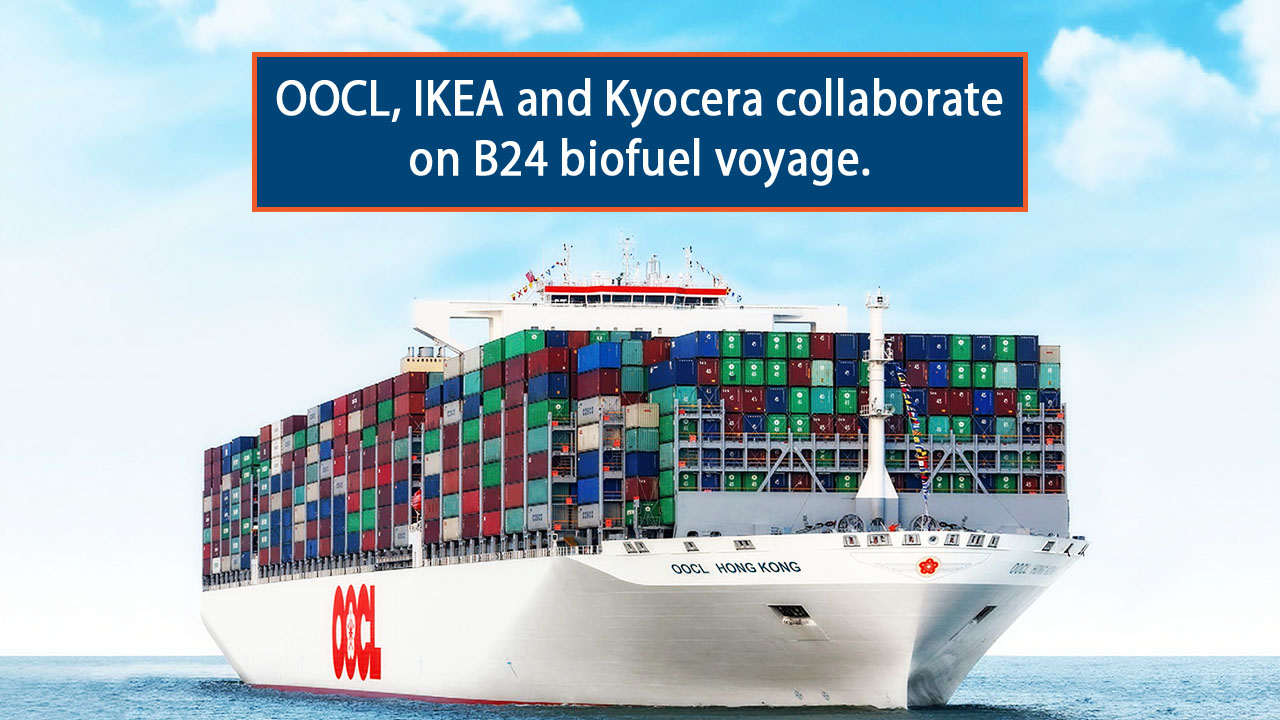
 On their recent joint venture, OOCL, IKEA, and Kyocera utilized a
24% biofuel blend known as B24 for their shipping operations. This blend
incorporates ISCC-certified Used Cooking Oil Methyl Ester mixed with Very Low
Sulfur Fuel Oil (VLSFO). The use of this biofuel is significant because it
helps lower carbon emissions in the shipping industry. Here’s how it works:
Biofuels, like the one used on this voyage, are made from renewable feedstocks
such as used cooking oil. When these biofuels are burned, they emit CO2.
However, this CO2 was originally captured from the atmosphere by the plants or
algae that produced the feedstock. Therefore, on a well-to-wake basis—meaning
from production to end-use—the carbon released is part of a cycle where the
carbon is captured by the biofuel's source and then released when the fuel is
used. This cycle effectively reduces net carbon emissions compared to fossil
fuels, which release carbon that has been stored underground for millions of
years. The reduction in carbon emissions achieved during this voyage will be
apportioned to the three partners, lowering the carbon footprint of their
cargo. To certify this achievement, each partner will receive a Green
Certificate, which serves as a credible acknowledgment of their contribution to
carbon emission reductions through the use of biofuel. The process of
calculating and tracking these carbon savings is managed by the Global Shipping
Business Network (GSBN). The data regarding emissions savings and their
allocation is recorded on a blockchain, ensuring the records are transparent,
secure, and immutable. This blockchain technology provides a reliable and
traceable record of the carbon savings achieved through the biofuel voyage.
Maritime
OOCL, IKEA and Kyocera collaborate on B24 biofuel voyage.
02 Sep 24