SPECIAL OFFER • LIMITED TIME

Ruzave Alliance

Get real-time shipping updates, verified business visibility, and growth tools for your Alliance Group — First Come, First Serve.

Ruzave Alliance
Verified Network
📈 Business Growth/Chat
🌍 Global Community
Trusted by shipping professionals • Download the app now

New container ships are leaning towards large LNG-fuelled vessels and skipping smaller feeders.

New container ships are leaning towards large LNG-fuelled vessels and skipping smaller feeders.
blog image
Maritime

New container ships are leaning towards large LNG-fuelled vessels and skipping smaller feeders.

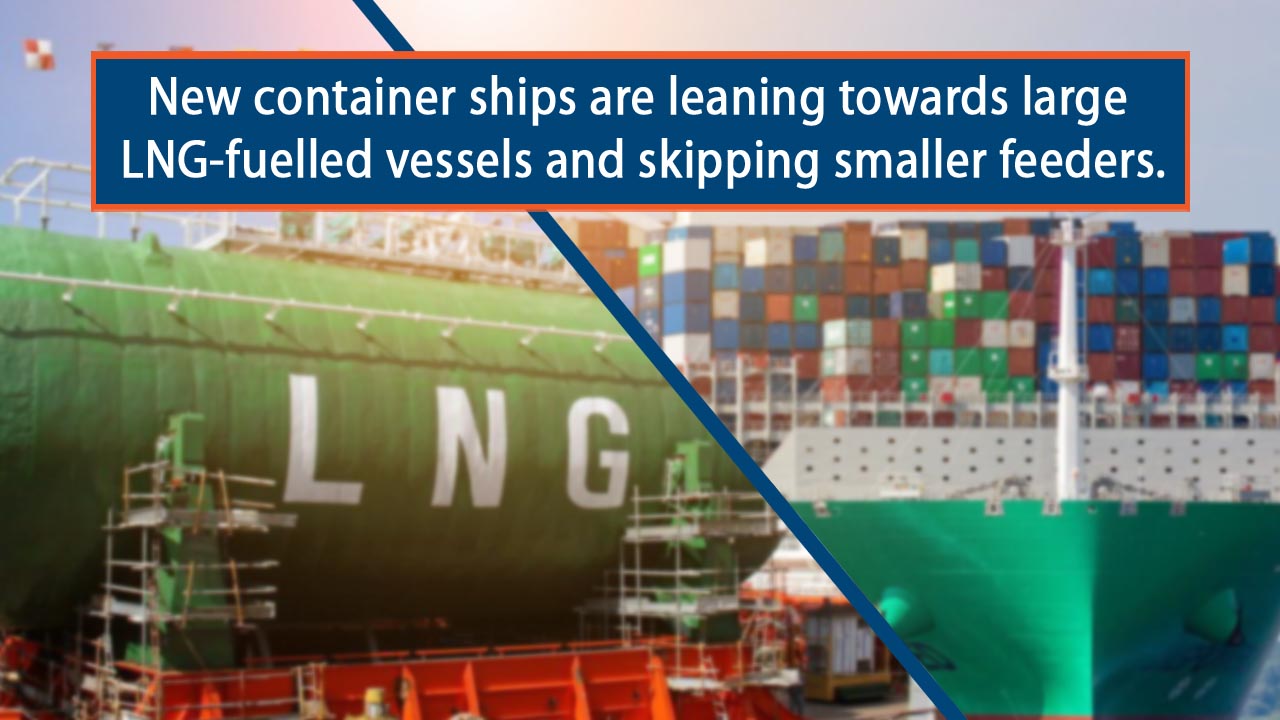
The world’s largest container shipping lines currently have 371 vessels on order. Of these, 162 ships are LNG-powered, totalling 2.2 million teu (twenty-foot equivalent units). Among the LNG-powered vessels, 80 are particularly large, each exceeding 15,000 teu, and collectively representing 1.44 million teu. In total, these carriers have placed orders for a combined capacity of 4,843,424 teu. The ordering trend shows a clear preference for larger vessels, while smaller feeder ships are being largely overlooked. Dynamar analyst Darron Wadey has raised concerns about this trend, noting that the emphasis on increasingly larger ships might lead to an imbalance in the fleet. He points out that smaller, short-sea vessels are facing challenges due to stringent sustainability criteria and regulations, which are more difficult to meet because of their smaller size. This focus on large vessels could potentially create future problems for the industry if smaller ships become more strained under these regulations. In addition to the challenges facing feeder vessels, Maersk is relatively inactive compared to other top carriers when it comes to new orders. The company currently has only 21 ships on order. This includes six vessels each in the 7,500-10,000 teu and 15,000+ teu size categories, and nine vessels in the intermediate 12,500-15,000 teu range. This relatively modest order book positions Maersk as one of the less aggressive players among the leading container shipping lines in terms of fleet expansion.

17 Aug 24
blog image
Maritime

New container ships are leaning towards large LNG-fuelled vessels and skipping smaller feeders.

The world’s largest container shipping lines currently have 371 vessels on order. Of these, 162 ships are LNG-powered, totalling 2.2 million teu (twenty-foot equivalent units). Among the LNG-powered vessels, 80 are particularly large, each exceeding 15,000 teu, and collectively representing 1.44 million teu. In total, these carriers have placed orders for a combined capacity of 4,843,424 teu. The ordering trend shows a clear preference for larger vessels, while smaller feeder ships are being largely overlooked. Dynamar analyst Darron Wadey has raised concerns about this trend, noting that the emphasis on increasingly larger ships might lead to an imbalance in the fleet. He points out that smaller, short-sea vessels are facing challenges due to stringent sustainability criteria and regulations, which are more difficult to meet because of their smaller size. This focus on large vessels could potentially create future problems for the industry if smaller ships become more strained under these regulations. In addition to the challenges facing feeder vessels, Maersk is relatively inactive compared to other top carriers when it comes to new orders. The company currently has only 21 ships on order. This includes six vessels each in the 7,500-10,000 teu and 15,000+ teu size categories, and nine vessels in the intermediate 12,500-15,000 teu range. This relatively modest order book positions Maersk as one of the less aggressive players among the leading container shipping lines in terms of fleet expansion.


17 Aug 24
blog image
Maritime

New container ships are leaning towards large LNG-fuelled vessels and skipping smaller feeders.

The world’s largest container shipping lines currently have 371 vessels on order. Of these, 162 ships are LNG-powered, totalling 2.2 million teu (twenty-foot equivalent units). Among the LNG-powered vessels, 80 are particularly large, each exceeding 15,000 teu, and collectively representing 1.44 million teu. In total, these carriers have placed orders for a combined capacity of 4,843,424 teu. The ordering trend shows a clear preference for larger vessels, while smaller feeder ships are being largely overlooked. Dynamar analyst Darron Wadey has raised concerns about this trend, noting that the emphasis on increasingly larger ships might lead to an imbalance in the fleet. He points out that smaller, short-sea vessels are facing challenges due to stringent sustainability criteria and regulations, which are more difficult to meet because of their smaller size. This focus on large vessels could potentially create future problems for the industry if smaller ships become more strained under these regulations. In addition to the challenges facing feeder vessels, Maersk is relatively inactive compared to other top carriers when it comes to new orders. The company currently has only 21 ships on order. This includes six vessels each in the 7,500-10,000 teu and 15,000+ teu size categories, and nine vessels in the intermediate 12,500-15,000 teu range. This relatively modest order book positions Maersk as one of the less aggressive players among the leading container shipping lines in terms of fleet expansion.


17 Aug 24