All Categories
.png) Maritime
Maritime  Port Terminal Services
  Ocean Logistics
  Air Logistics
  Land Logistics
  Chartering & Broking
 .png) Warehousing
Warehousing  Freight Forwarders
  Association & Institute
 Maersk is set to expand its fleet with 50-60 new
dual-fuel vessels, which will include a mix of both owned and chartered ships,
totalling around 800,000 TEU. Of this, approximately 300,000 TEU will be from
vessels Maersk owns, while the remaining 500,000 TEU will come from
time-charter agreements. This strategic decision is part of Maersk's broader
plan to modernize its fleet and ensure a reliable capacity for its operations
from 2026 to 2030. The new vessels will feature dual-fuel propulsion systems,
allowing them to operate on a mix of methanol and liquefied natural gas (LNG),
with the specific balance to be determined based on future regulations and the
availability of green fuels. Maersk envisions a multi-fuel future for the
shipping industry, including the use of liquefied bio-methane (bio-LNG). Once
these vessels are delivered, they will represent about 25% of Maersk’s fleet,
all equipped with dual-fuel engines, enhancing the company's green credentials
and its ability to meet greenhouse gas reduction goals. To support this, Maersk
is also working on securing long-term off take agreements for bio-LNG, ensuring
a steady supply of this low-emission fuel. The new build policy and charter
deals are designed to offer Maersk both operational flexibility and a
competitive edge in the market. Despite the significant investment, these
orders are set to replace older vessels that have reached the end of their
operational life, keeping Maersk’s overall fleet size stable at approximately
4.3 million TEU. According to Rabab Boulos, Maersk's Chief Operating Officer,
these orders are essential to maintaining a steady flow of capacity and
building a robust, future-ready fleet. Ahmed Hassan, Head of Asset Strategy and
Strategic Partnerships, emphasized that the fleet size will remain unchanged as
new ships replace decommissioned ones.
Maritime
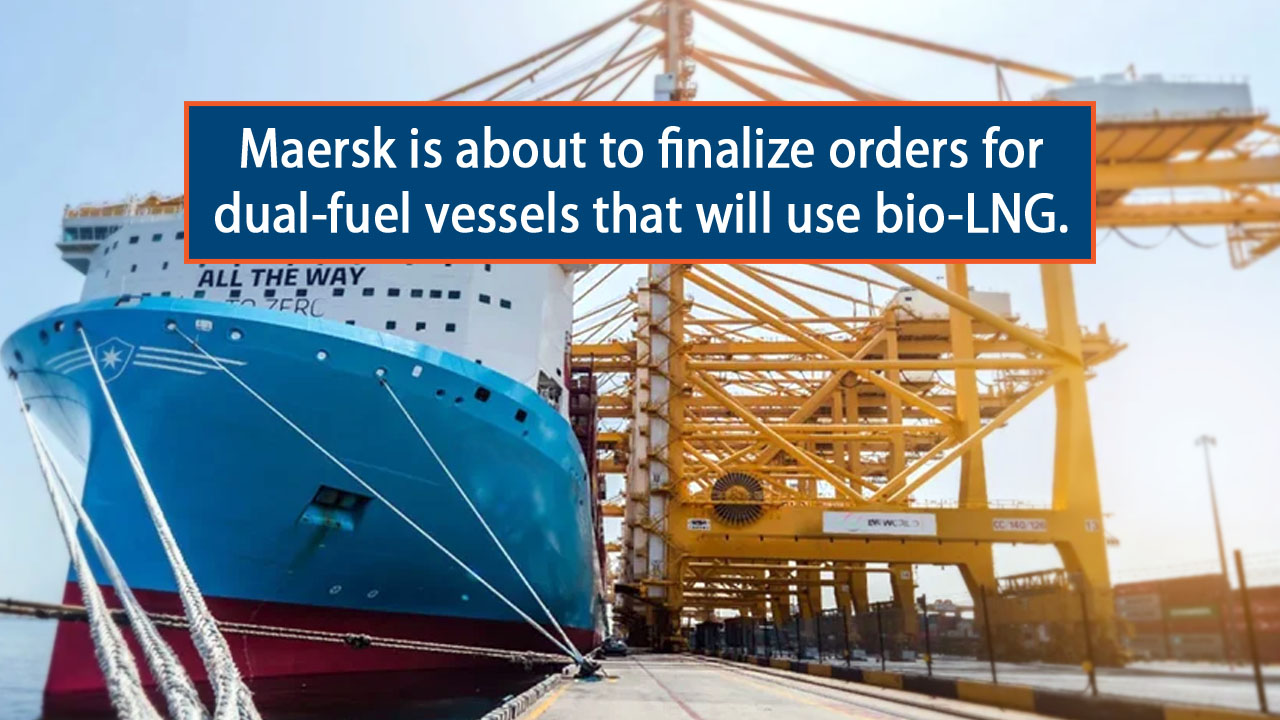
Maersk is about to finalize orders for dual-fuel vessels that will use bio-LNG.
10 Aug 24