SPECIAL OFFER • LIMITED TIME

Ruzave Alliance

Get real-time shipping updates, verified business visibility, and growth tools for your Alliance Group — First Come, First Serve.

Ruzave Alliance
Verified Network
📈 Business Growth/Chat
🌍 Global Community
Trusted by shipping professionals • Download the app now

JNPA has introduced standard operating procedures to streamline operations at empty container yards, requiring shipping lines to make payments for their use.

JNPA has introduced standard operating procedures to streamline operations at empty container yards, requiring shipping lines to make payments for their use.
blog image
Maritime

JNPA has introduced standard operating procedures to streamline operations at empty container yards, requiring shipping lines to make payments for their use.

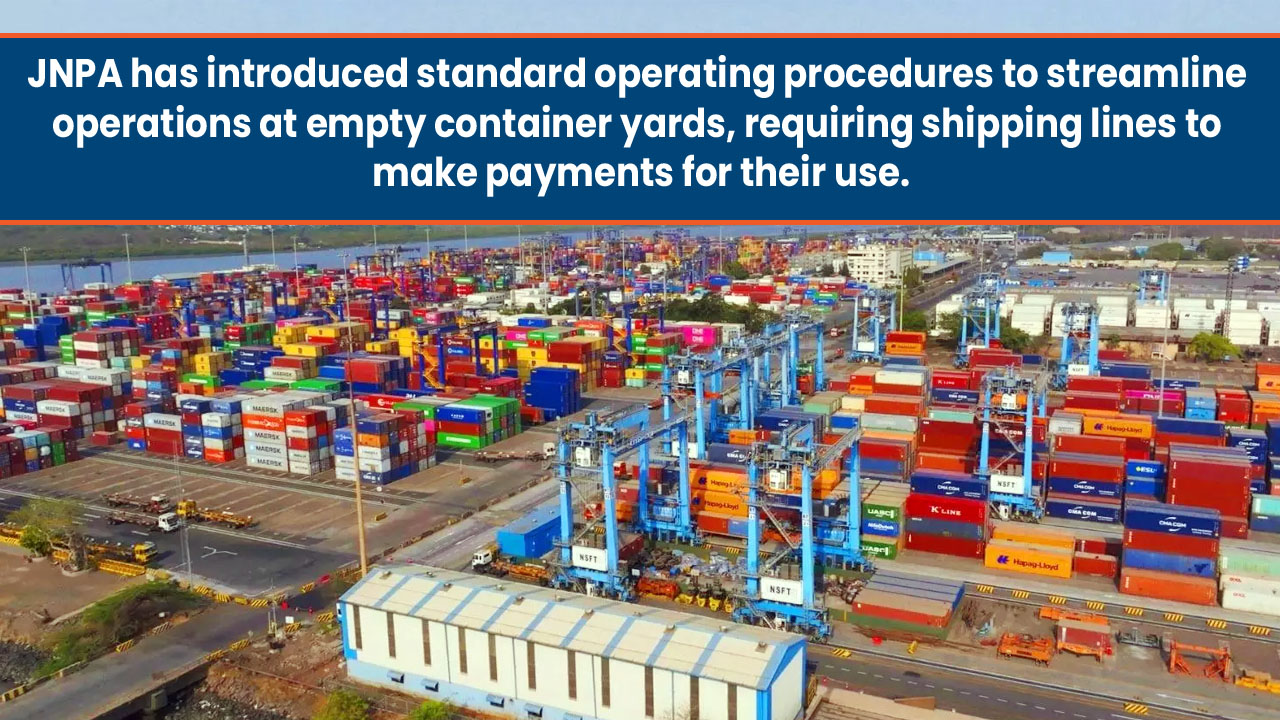
JNPA has implemented a comprehensive set of standard operating procedures (SoPs) to enhance the efficiency of operations at empty container yards. These procedures are designed to address ongoing challenges related to the management of empty containers, which are critical for maintaining fluid operations in the shipping and logistics sectors. Under the new system, shipping lines will be required to make payments for their use of these yards, a move intended to promote accountability and encourage faster turnover of empty containers. By instituting this payment requirement, JNPA aims to discourage the accumulation of empty containers in the yards, thereby optimizing space and resources. The new SoPs include streamlined processes for the handling, storage, and retrieval of empty containers, which should lead to reduced turnaround times and improved service levels for shipping lines. This initiative is expected to not only enhance operational efficiency but also contribute to better overall management of port resources. Additionally, the implementation of these SoPs aligns with JNPA's broader goals of modernizing port operations and adapting to the evolving demands of the shipping industry. By proactively addressing logistical challenges, JNPA is working to ensure that the port remains competitive and responsive to the needs of its users. Overall, this move reflects a commitment to improving the sustainability and productivity of port operations while supporting the shipping industry’s growth. The changes are anticipated to foster a more efficient and organized environment in the empty container yards, ultimately benefiting all stakeholders involved.

25 Oct 24
blog image
Maritime

JNPA has introduced standard operating procedures to streamline operations at empty container yards, requiring shipping lines to make payments for their use.

JNPA has implemented a comprehensive set of standard operating procedures (SoPs) to enhance the efficiency of operations at empty container yards. These procedures are designed to address ongoing challenges related to the management of empty containers, which are critical for maintaining fluid operations in the shipping and logistics sectors. Under the new system, shipping lines will be required to make payments for their use of these yards, a move intended to promote accountability and encourage faster turnover of empty containers. By instituting this payment requirement, JNPA aims to discourage the accumulation of empty containers in the yards, thereby optimizing space and resources. The new SoPs include streamlined processes for the handling, storage, and retrieval of empty containers, which should lead to reduced turnaround times and improved service levels for shipping lines. This initiative is expected to not only enhance operational efficiency but also contribute to better overall management of port resources. Additionally, the implementation of these SoPs aligns with JNPA's broader goals of modernizing port operations and adapting to the evolving demands of the shipping industry. By proactively addressing logistical challenges, JNPA is working to ensure that the port remains competitive and responsive to the needs of its users. Overall, this move reflects a commitment to improving the sustainability and productivity of port operations while supporting the shipping industry’s growth. The changes are anticipated to foster a more efficient and organized environment in the empty container yards, ultimately benefiting all stakeholders involved.


25 Oct 24
blog image
Maritime

JNPA has introduced standard operating procedures to streamline operations at empty container yards, requiring shipping lines to make payments for their use.

JNPA has implemented a comprehensive set of standard operating procedures (SoPs) to enhance the efficiency of operations at empty container yards. These procedures are designed to address ongoing challenges related to the management of empty containers, which are critical for maintaining fluid operations in the shipping and logistics sectors. Under the new system, shipping lines will be required to make payments for their use of these yards, a move intended to promote accountability and encourage faster turnover of empty containers. By instituting this payment requirement, JNPA aims to discourage the accumulation of empty containers in the yards, thereby optimizing space and resources. The new SoPs include streamlined processes for the handling, storage, and retrieval of empty containers, which should lead to reduced turnaround times and improved service levels for shipping lines. This initiative is expected to not only enhance operational efficiency but also contribute to better overall management of port resources. Additionally, the implementation of these SoPs aligns with JNPA's broader goals of modernizing port operations and adapting to the evolving demands of the shipping industry. By proactively addressing logistical challenges, JNPA is working to ensure that the port remains competitive and responsive to the needs of its users. Overall, this move reflects a commitment to improving the sustainability and productivity of port operations while supporting the shipping industry’s growth. The changes are anticipated to foster a more efficient and organized environment in the empty container yards, ultimately benefiting all stakeholders involved.


25 Oct 24