All Categories
.png) Maritime
Maritime  Port Terminal Services
  Ocean Logistics
  Air Logistics
  Land Logistics
  Chartering & Broking
 .png) Warehousing
Warehousing  Freight Forwarders
  Association & Institute
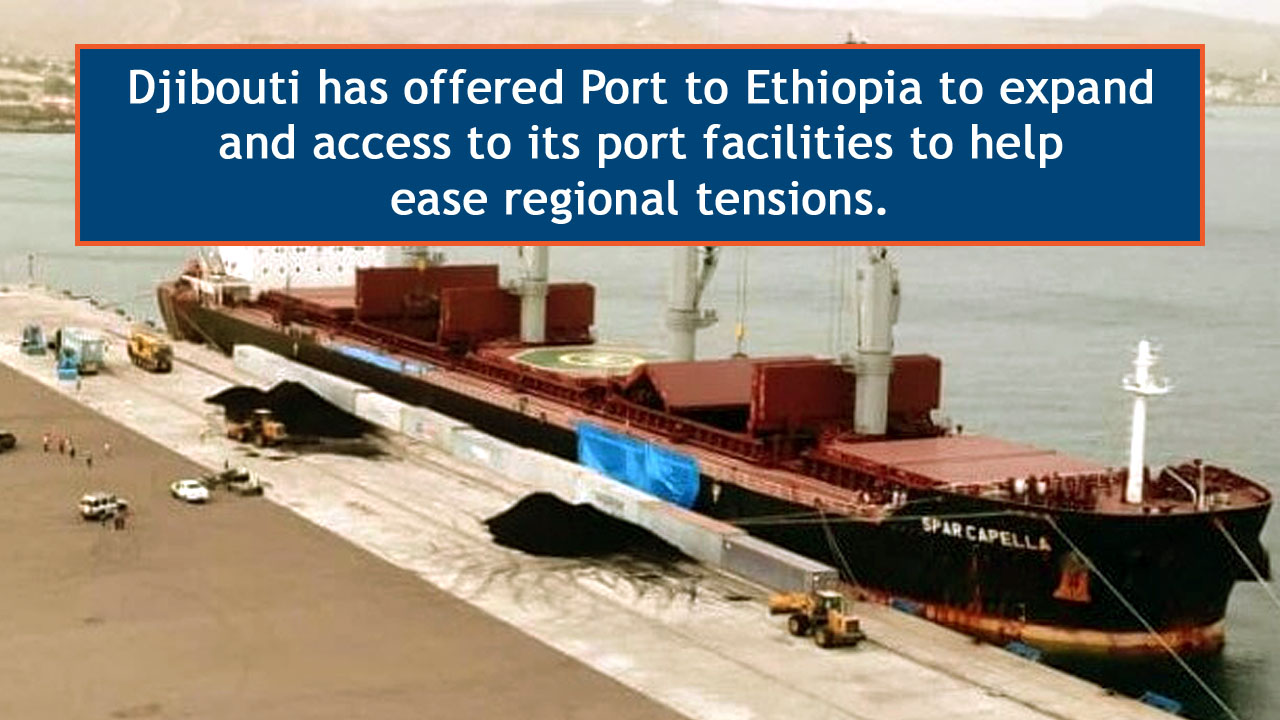
 Djibouti is offering Ethiopia exclusive access to the Port of
Tadjoura as a solution to regional tensions and to provide Ethiopia with direct
access to the Gulf of Aden. This proposal is an alternative to Ethiopia’s
previous plans to secure port access in Somaliland, which had led to complex
negotiations mediated by Turkey. Since Eritrea’s secession in 1993, Ethiopia
has been landlocked and relies heavily on Djibouti’s main port for
approximately 90 percent of its international trade. Ethiopia’s pursuit of
direct sea access has heightened regional tensions. The Port of Tadjoura, which
opened in 2017 with a $90 million investment from Djibouti and support from the
Italian firm Technical, is located west of Tadjoura town and is designed to
handle significant shipping volumes. It features facilities that include a RoRo
terminal and can accommodate large vessels, with a capacity to handle up to
four million tons of potash annually. Djibouti’s offer aims to counter the
growing influence of Somaliland’s Port of Berbera, which has been improving its
performance and challenging Djibouti’s maritime dominance. The World Bank’s
Container Port Performance Index recently ranked Berbera higher than Djibouti’s
port, highlighting the competitive shift. Additionally, the offer comes amid
rising regional tensions, including Egypt’s recent arms supplies to Somalia and
its ongoing dispute with Ethiopia over a $4 billion hydroelectric dam on the
Blue Nile. This dam is a significant point of contention, with Egypt fearing it
will negatively impact water flow downstream. Djibouti’s proposal is seen as a
strategic move to stabilize the region and strengthen economic ties with
Ethiopia while addressing the broader geopolitical shifts.
Port Terminal Services
Djibouti has offered Port to Ethiopia to expand and access to its port facilities to help ease regional tensions.
04 Sep 24