All Categories
.png) Maritime
Maritime  Port Terminal Services
  Ocean Logistics
  Air Logistics
  Land Logistics
  Chartering & Broking
 .png) Warehousing
Warehousing  Freight Forwarders
  Association & Institute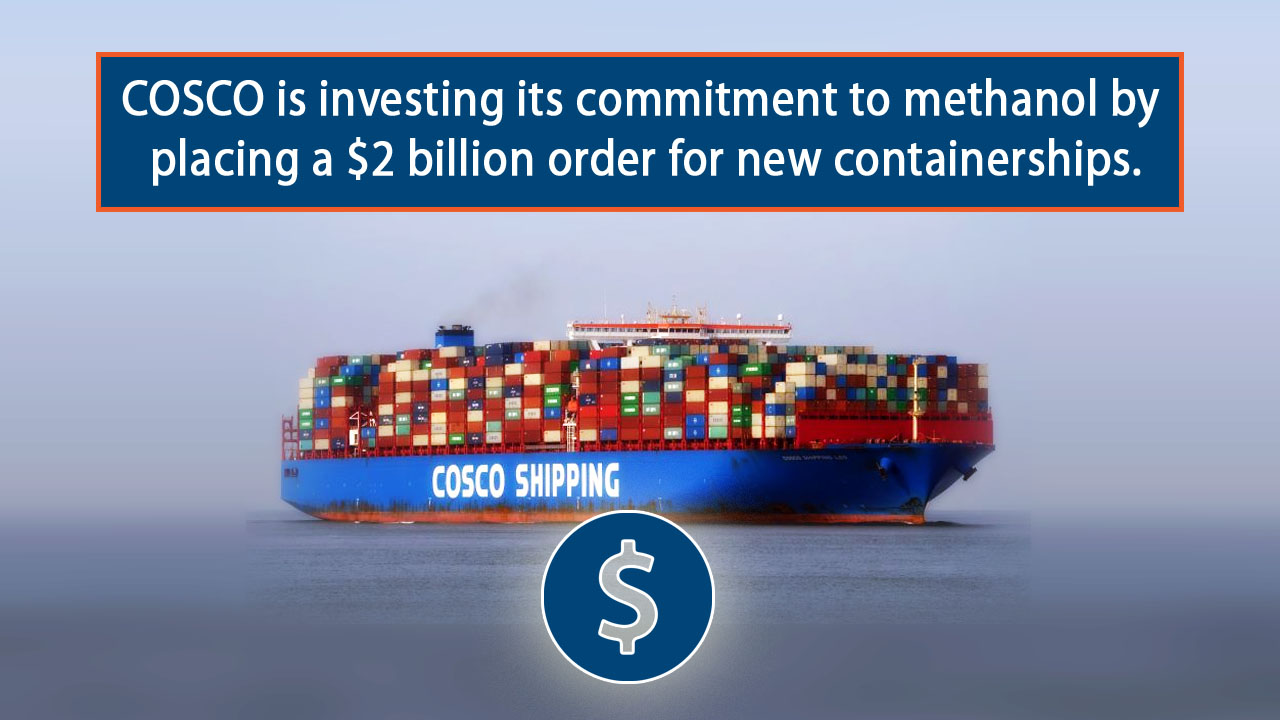
COSCO Shipping continues to make significant strides in sustainable shipping with its latest move: a $2.15 billion contract for new methanol-fueled containerships tailored for its Latin American routes. This new order highlights COSCO's ongoing commitment to green technology despite a recent slowdown in methanol ship orders and growing concerns about the supply and cost of green fuels like e-methanol. Previously, COSCO had already made substantial investments in methanol-powered shipping. Two years ago, they ordered a dozen massive 24,000 TEU dual-fuel containerships in a $2.9 billion deal. These ships, set for delivery between 2027 and 2028, are being built at two different shipyards and will serve both COSCO and its subsidiary OOCL. Additionally, COSCO and MAN have agreed on converting eight of its existing vessels to methanol power starting in 2025, with options for more conversions. COSCO’s shipbuilding arm is also deepening its expertise in methanol technology, having contracted to perform the first methanol conversions for Seaspan, a project involving five vessels in collaboration with charterer Hapag-Lloyd. The new $2.15 billion order
features ships with a capacity of 13,700 TEU, designed
specifically for COSCO’s Latin American service. These vessels, developed in
partnership with China Shipbuilding and Ocean Engineering Design and Research
Institute, will be built by Yangzhou COSCO Shipping Heavy Industries and are
scheduled for delivery between May 2027 and March 2029. The ships will
incorporate an enlarged capacity for refrigerated containers to cater to the
needs of the Latin American route and will include several advanced efficiency
features. These include a bulb bow, a stern energy-saving device, the world’s
largest permanent magnet shaft generator, a bow wind deflector, a hull air
lubrication system, and intelligent ship management systems. In addition to
focusing on methanol, COSCO is also pursuing other green initiatives. For its
inland and coastal shipping, the company has introduced all-electric carriers
with batteries and has launched a pilot project using biofuels, further
enhancing its commitment to environmental sustainability.