All Categories
.png) Maritime
Maritime  Port Terminal Services
  Ocean Logistics
  Air Logistics
  Land Logistics
  Chartering & Broking
 .png) Warehousing
Warehousing  Freight Forwarders
  Association & Institute
 China's gateway port to ASEAN has witnessed a
remarkable surge in exports of new energy vehicle (NEV) parts, highlighting the
region's growing focus on electric vehicles. This increase can be attributed to
several factors, including the rising demand for greener transportation
solutions and supportive government policies promoting electric mobility. As
countries in ASEAN aim to reduce their carbon footprints and transition to more
sustainable energy sources, the demand for NEVs is skyrocketing. This has
prompted manufacturers in China to ramp up production and export of components
such as batteries, electric motors, and control systems. The gateway port plays
a crucial role in facilitating these exports, benefiting from its strategic
location and well-developed logistics infrastructure. Enhanced shipping routes
and efficient handling processes have made it easier for companies to transport
these parts to various ASEAN markets. Additionally, the surge in NEV parts
exports aligns with China's broader strategy to strengthen its position in the
global electric vehicle supply chain, reinforcing its role as a leading player
in the automotive industry. As this trend continues, it is expected to further
boost trade relations between China and ASEAN countries, fostering economic
growth and collaboration in the electric vehicle sector.
Maritime
Port Terminal Services
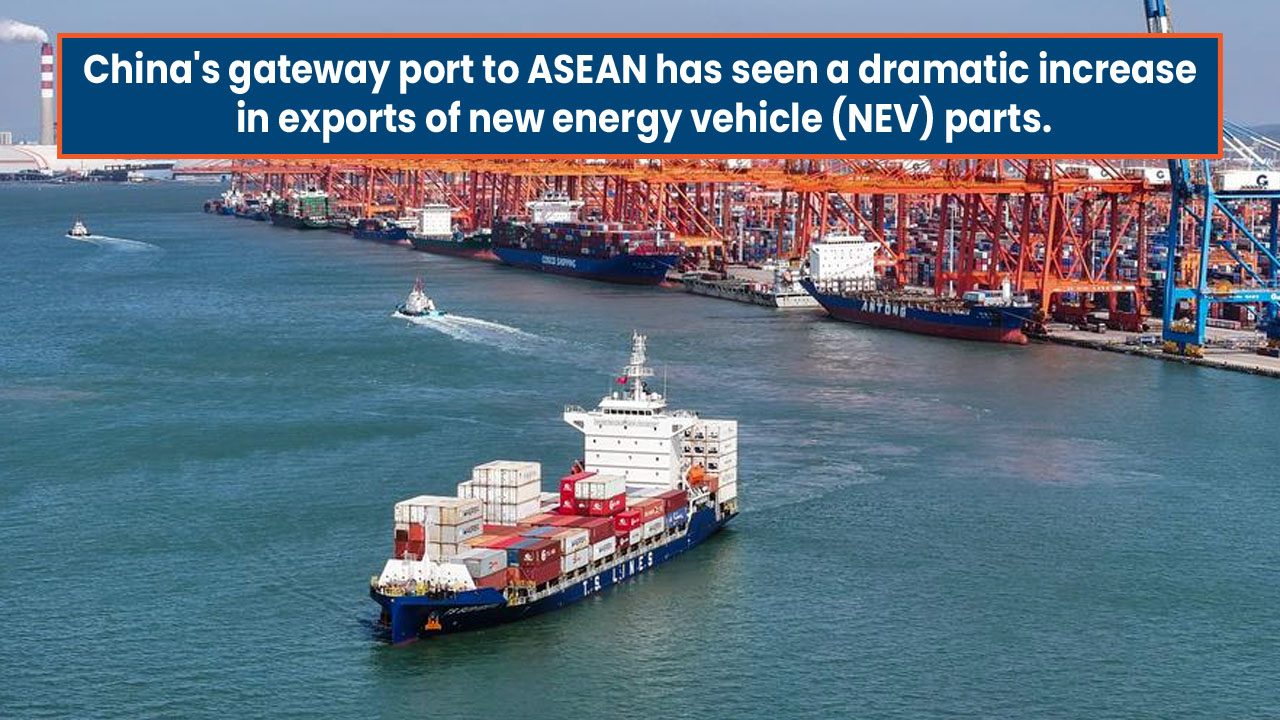
China's gateway port to ASEAN has seen a dramatic increase in exports of new energy vehicle (NEV) parts.
28 Oct 24