SPECIAL OFFER • LIMITED TIME

Ruzave Alliance

Get real-time shipping updates, verified business visibility, and growth tools for your Alliance Group — First Come, First Serve.

Ruzave Alliance
Verified Network
📈 Business Growth/Chat
🌍 Global Community
Trusted by shipping professionals • Download the app now

Carisbrooke Shipping is set to showcase a new air wing design from GT Wings in Maritime Technology.

Carisbrooke Shipping is set to showcase a new air wing design from GT Wings in Maritime Technology.
blog image
Maritime

Carisbrooke Shipping is set to showcase a new air wing design from GT Wings in Maritime Technology.

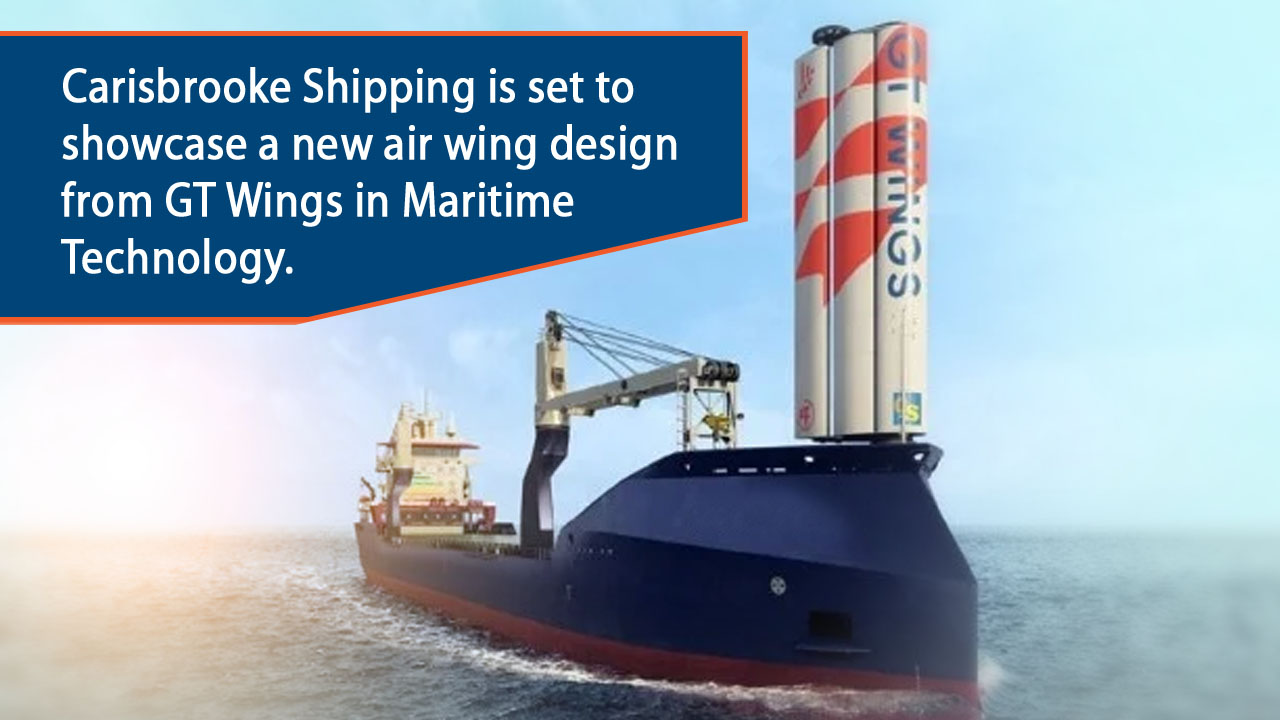
A new agreement has been made to advance the development of a next-generation air wing as part of a UK government-funded project aimed at expanding wind-assisted propulsion. GT Wings is set to showcase its AirWing Technology on a Carisbrooke Shipping general cargo ship starting in the fourth quarter of 2024. Carisbrooke Shipping, which operates a fleet of multi-purpose cargo ships across Northern Europe, the UK, Mediterranean, and Black Sea, has been collaborating with GT Wings for over two years. They plan to install this wind propulsion technology on one of their UK-registered dry bulkers, the Vectis Progress, a vessel built in 2012 and measuring 407 feet (124 meters) long. GT Wings has teamed up with A20 Manufacturing and KS Composites to bring this technology to life. A20 Manufacturing has played a crucial role in refining the AirWing's design for optimal production. George Thompson, CEO of GT Wings, highlighted that this collaboration is key to validating the AirWing and making a real impact on reducing global shipping emissions. The first AirWing, a 66-foot (20-meter) unit, will be installed at the bow of the Vectis Progress. GT Wings claims this new technology uses advanced airflow techniques to achieve up to 30% fuel savings. Carisbrooke expects to see fuel consumption reductions between 5 and 30% and lower emissions, depending on how the technology is configured and used. The compact design is particularly suited for general cargo ships with limited deck space. The project also benefits from expertise provided by the University of Bristol, which is involved in testing and modelling the composite structures. GT Wings received a £3.7 million grant from the UK Department of Transport through the Clean Maritime Demonstration Competition, which supports innovative technologies to decarbonize the maritime sector. This program requires participants to complete demonstrations and feasibility studies between April 2024 and March 2025.

08 Aug 24
blog image
Maritime

Carisbrooke Shipping is set to showcase a new air wing design from GT Wings in Maritime Technology.

A new agreement has been made to advance the development of a next-generation air wing as part of a UK government-funded project aimed at expanding wind-assisted propulsion. GT Wings is set to showcase its AirWing Technology on a Carisbrooke Shipping general cargo ship starting in the fourth quarter of 2024. Carisbrooke Shipping, which operates a fleet of multi-purpose cargo ships across Northern Europe, the UK, Mediterranean, and Black Sea, has been collaborating with GT Wings for over two years. They plan to install this wind propulsion technology on one of their UK-registered dry bulkers, the Vectis Progress, a vessel built in 2012 and measuring 407 feet (124 meters) long. GT Wings has teamed up with A20 Manufacturing and KS Composites to bring this technology to life. A20 Manufacturing has played a crucial role in refining the AirWing's design for optimal production. George Thompson, CEO of GT Wings, highlighted that this collaboration is key to validating the AirWing and making a real impact on reducing global shipping emissions. The first AirWing, a 66-foot (20-meter) unit, will be installed at the bow of the Vectis Progress. GT Wings claims this new technology uses advanced airflow techniques to achieve up to 30% fuel savings. Carisbrooke expects to see fuel consumption reductions between 5 and 30% and lower emissions, depending on how the technology is configured and used. The compact design is particularly suited for general cargo ships with limited deck space. The project also benefits from expertise provided by the University of Bristol, which is involved in testing and modelling the composite structures. GT Wings received a £3.7 million grant from the UK Department of Transport through the Clean Maritime Demonstration Competition, which supports innovative technologies to decarbonize the maritime sector. This program requires participants to complete demonstrations and feasibility studies between April 2024 and March 2025.


08 Aug 24
blog image
Maritime

Carisbrooke Shipping is set to showcase a new air wing design from GT Wings in Maritime Technology.

A new agreement has been made to advance the development of a next-generation air wing as part of a UK government-funded project aimed at expanding wind-assisted propulsion. GT Wings is set to showcase its AirWing Technology on a Carisbrooke Shipping general cargo ship starting in the fourth quarter of 2024. Carisbrooke Shipping, which operates a fleet of multi-purpose cargo ships across Northern Europe, the UK, Mediterranean, and Black Sea, has been collaborating with GT Wings for over two years. They plan to install this wind propulsion technology on one of their UK-registered dry bulkers, the Vectis Progress, a vessel built in 2012 and measuring 407 feet (124 meters) long. GT Wings has teamed up with A20 Manufacturing and KS Composites to bring this technology to life. A20 Manufacturing has played a crucial role in refining the AirWing's design for optimal production. George Thompson, CEO of GT Wings, highlighted that this collaboration is key to validating the AirWing and making a real impact on reducing global shipping emissions. The first AirWing, a 66-foot (20-meter) unit, will be installed at the bow of the Vectis Progress. GT Wings claims this new technology uses advanced airflow techniques to achieve up to 30% fuel savings. Carisbrooke expects to see fuel consumption reductions between 5 and 30% and lower emissions, depending on how the technology is configured and used. The compact design is particularly suited for general cargo ships with limited deck space. The project also benefits from expertise provided by the University of Bristol, which is involved in testing and modelling the composite structures. GT Wings received a £3.7 million grant from the UK Department of Transport through the Clean Maritime Demonstration Competition, which supports innovative technologies to decarbonize the maritime sector. This program requires participants to complete demonstrations and feasibility studies between April 2024 and March 2025.


08 Aug 24