All Categories
.png) Maritime
Maritime  Port Terminal Services
  Ocean Logistics
  Air Logistics
  Land Logistics
  Chartering & Broking
 .png) Warehousing
Warehousing  Freight Forwarders
  Association & Institute
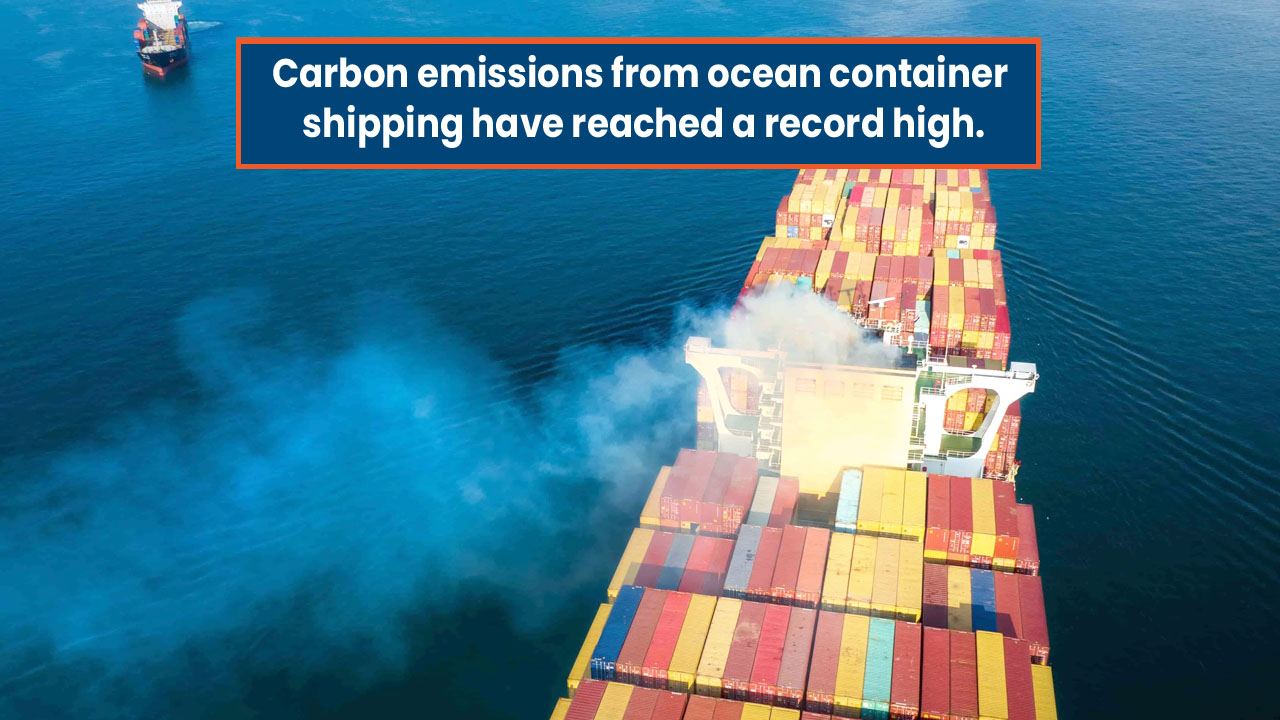
 The record high in carbon emissions from ocean
container shipping reflects several interconnected factors. Increased global
demand for goods has led to more ships operating, and many vessels are larger
than ever, which boosts overall emissions. Additionally, port congestion has
forced ships to slow down, resulting in inefficient fuel use. The International
Maritime Organization (IMO) has set ambitious targets for reducing greenhouse
gas emissions in the shipping sector, aiming for a 40% reduction by 2030 and
reaching net-zero by 2050. However, progress has been slow, with many companies
still relying on traditional heavy fuel oil, which is a major contributor to
emissions. To combat this, the industry is exploring various solutions,
including alternative fuels like LNG and hydrogen, as well as technologies that
enhance energy efficiency. Innovations like wind-assisted propulsion and
digital tools for optimizing routes are also being tested. As awareness of
climate change grows, pressure from governments, consumers, and environmental
groups is likely to increase, pushing the shipping industry to take more
decisive action to reduce its carbon footprint.
Maritime
Carbon emissions from ocean container shipping have reached a record high.
28 Oct 24