All Categories
.png) Maritime
Maritime  Port Terminal Services
  Ocean Logistics
  Air Logistics
  Land Logistics
  Chartering & Broking
 .png) Warehousing
Warehousing  Freight Forwarders
  Association & Institute
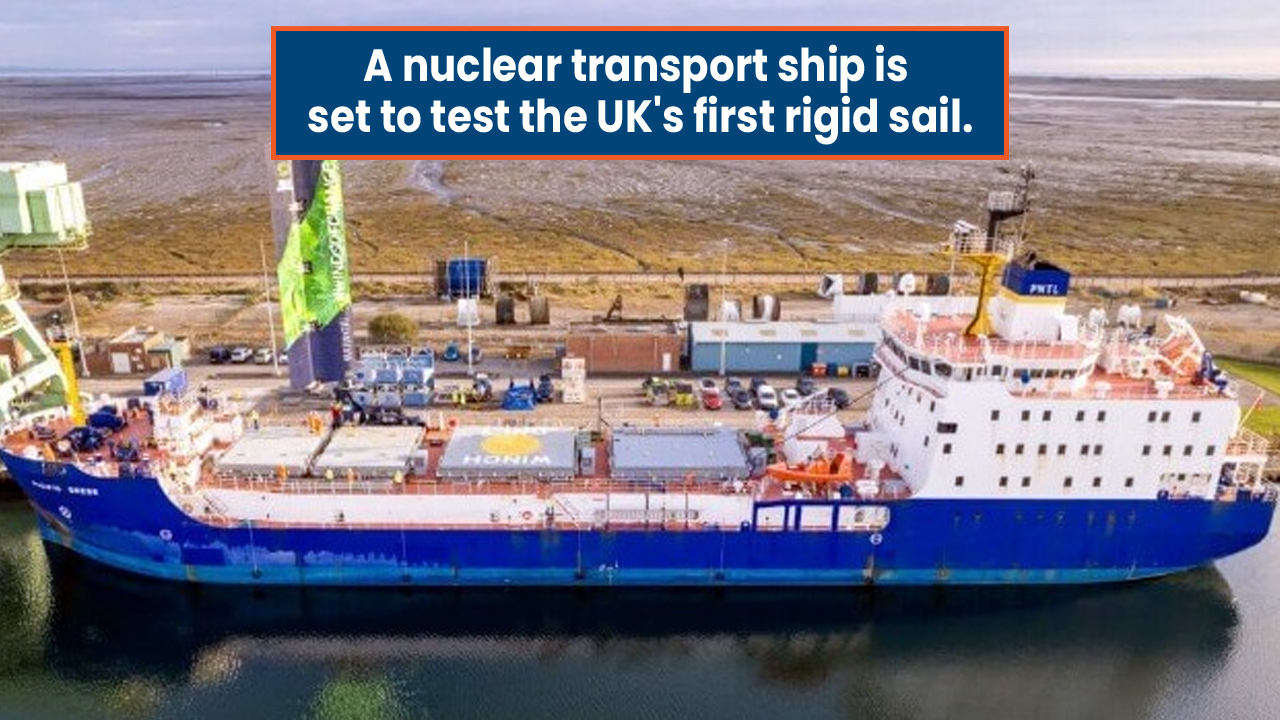
 In a groundbreaking collaboration, a ship designed to transport
spent nuclear fuel for the UK government is set to trial a new wind-assisted
propulsion technology. The Pacific Grebe, with a deadweight tonnage of 4,900,
arrived in Southampton on October 21, showcasing the first-ever installation of
the FastRig, developed by the UK company Smart Green Shipping. Built in 2010,
the Pacific Grebe is one of three vessels specifically designed for nuclear
material transport. Measuring 341 feet (104 meters), it features four specially
designed holds, each shielded to carry up to 20 flasks of nuclear waste. The
ship operates for Nuclear Transport Solutions (NTS), part of the UK’s Nuclear
Decommissioning Authority, which oversees the clean-up of the country’s nuclear
legacy. It typically sails over 10,000 miles without stopping, reaching speeds
of up to 14 knots. After departing from its home port of Barrow-in-Furness, the
Pacific Grebe will conduct sea trials this month with the new 20-meter
(65-foot) FastRig, a retractable rigid wing sail made from 100% recyclable
materials. According to Smart Green Shipping, this innovative sail could reduce
fuel consumption by up to 30%. The system features an intelligent, autonomous
operation that requires minimal deck space and can be retracted for port
activities. Diane Gilpin, CEO of Smart Green Shipping, noted that NTS's support
allows for formal sea trials, providing independently verified performance data
to validate the digital models and tank testing results developed by the
University of Southampton. The FastRig's retraction system was successfully
demonstrated during the voyage to Southampton, marking an exciting step forward
in sustainable maritime technology.
Maritime
A nuclear transport ship is set to test the UK's first rigid sail.
23 Oct 24